 RCIC News.
IRCC's broken promises leave millions of temporary residents without real pathways to permanent residence
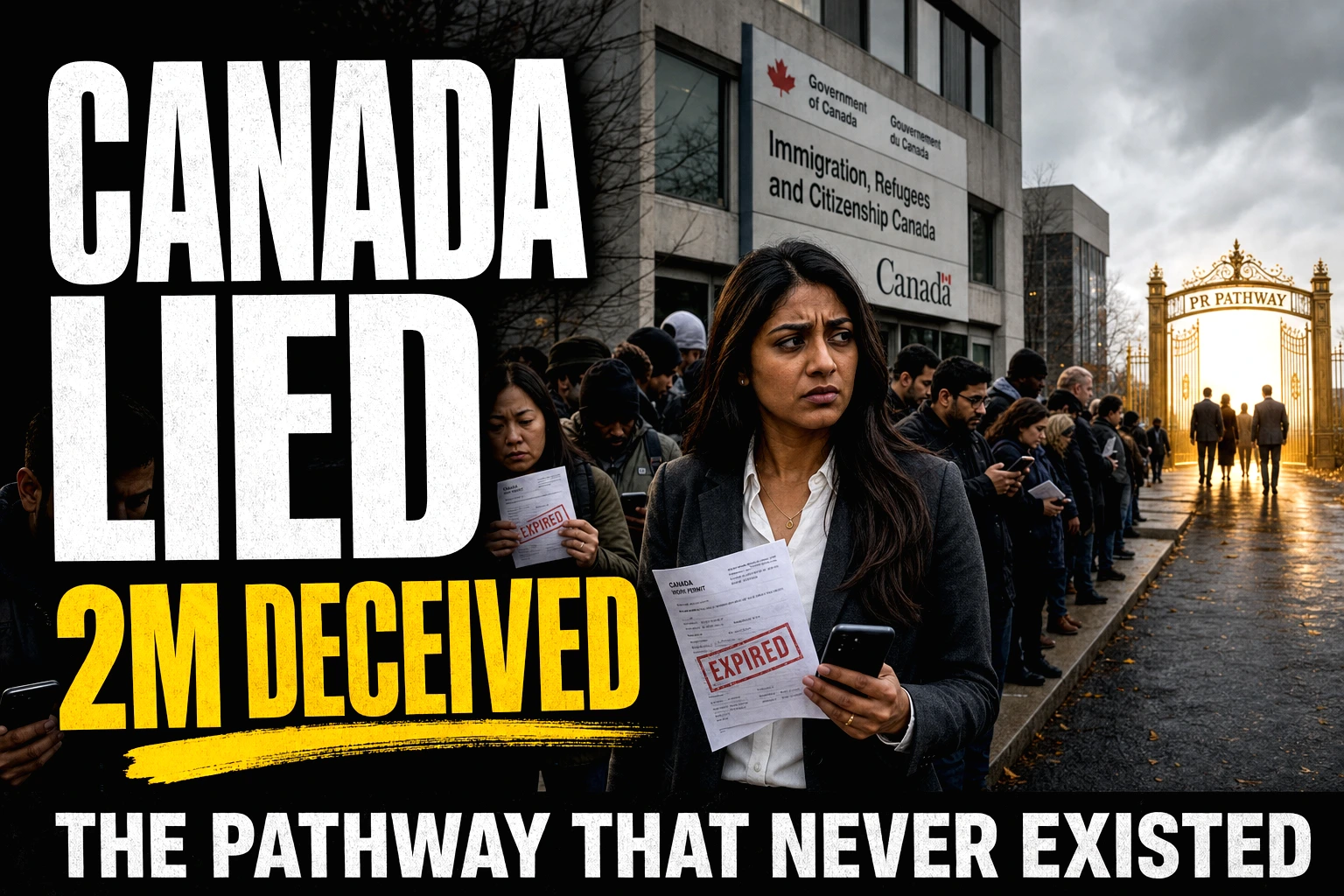
IRCC Misleads 2M Temporary Workers on PR Pathway
On This Page You Will Find:
- The shocking truth behind IRCC's "In-Canada Workers Initiative" that crushed hopes for millions
- How misleading government statements cost temporary residents thousands in preparation fees
- Real numbers showing only 1.3% of workers will benefit from this so-called "pathway"
- Why this 2025 announcement is nothing like the successful 2021 TR-to-PR program
- What temporary residents actually need to know about their permanent residence options
Summary:
Maria Santos, a temporary worker from the Philippines, spent $3,000 preparing for what she thought would be her chance at Canadian permanent residence. Like 2.3 million other temporary residents, she believed Immigration Minister Lena Metlege Diab's promises of a new pathway to PR. Instead, she discovered the harsh reality: IRCC's "In-Canada Workers Initiative" isn't a new program at all—it's simply faster processing for applications already in the system. This misleading announcement has created widespread disappointment and financial hardship for millions of temporary residents whose permits expire in 2025 and 2026, while benefiting only 1.3% of current workers.
🔑 Key Takeaways:
- The "In-Canada Workers Initiative" is NOT a new application program—it only accelerates existing PR applications already in the system
- Only 20,000 out of 1.49 million temporary workers (1.3%) will benefit from this initiative in 2026
- Minister Diab's misleading statements caused temporary residents to waste thousands on preparation fees and language tests
- This program requires applicants to have already applied through existing streams AND lived in smaller communities for 2+ years
- Unlike 2021's successful TR-to-PR pathway, there's no new portal, no fresh applications, and no first-come-first-served system
At 2 AM on a Tuesday night, Maria Santos refreshed her browser for the hundredth time, desperately searching for the application portal that Immigration Minister Lena Metlege Diab had promised would launch "very very very soon." Like millions of other temporary residents across Canada, Maria had spent months preparing—booking expensive language tests, gathering tax documents, and paying consultant fees—all based on the minister's assurances of a new pathway to permanent residence.
What she found instead would crush the dreams of 2.3 million temporary residents facing permit expiration.
The Promise That Never Was
For months leading up to April 2025, Minister Diab repeatedly told temporary residents that a program to transition 33,000 people to permanent residence had been "soft launched." In social media interviews, she created anticipation by saying criteria would be released imminently and hinting that larger cities would be excluded from the program.
The reality, revealed in IRCC's official announcement, painted a drastically different picture. The "In-Canada Workers Initiative" wasn't a new program at all—it was simply accelerated processing of permanent residence applications already sitting in government files.
"The minister's misleading and irresponsible statements created false hope for tens of thousands of migrants," says immigration lawyer David Cohen. "People spent their life savings preparing for something that didn't exist."
What You Actually Get (Spoiler: Not Much)
If you're hoping this initiative will solve your temporary resident status problems, prepare for disappointment. Here's what IRCC is actually offering:
No new applications accepted. There's no portal where you can submit a fresh permanent residence application. The government is only processing applications that were already submitted through existing programs.
Extremely limited scope. To qualify, you must simultaneously meet two conditions: you've already applied for PR through one of five specific programs, AND you've lived in a smaller Canadian community for at least two years.
Microscopic impact. With 1.49 million temporary workers currently in Canada, the 2026 target of 20,000 approvals represents just 1.3% of the workforce. Your chances of benefiting are statistically negligible.
The Numbers Don't Lie
The scale of this disappointment becomes clear when you examine the real statistics:
- 2.69 million temporary residents currently in Canada
- 2.3 million permits expiring in 2025 and 2026
- 20,000 maximum approvals planned for 2026
- 1.3% of temporary workers who might benefit
Between January and February 2026, IRCC approved just 3,600 applications under this initiative—18% of their annual target. At this pace, the program will help fewer people than a single day's worth of permit expirations.
Why This Isn't the 2021 Program You Remember
Many temporary residents hoped for a repeat of 2021's TR-to-PR pathway, which allowed fresh applications and reached capacity on its opening day. That program was revolutionary because it created new opportunities for people who hadn't yet applied for permanent residence.
This 2025 initiative operates on completely different principles:
2021 Program:
- New application portal opened
- Fresh submissions accepted
- First-come, first-served basis
- Immediate opportunity for eligible candidates
2025 Initiative:
- No new applications
- Only existing files processed faster
- Must meet multiple pre-existing conditions
- Helps only those already in the system
"It's like promising a new restaurant and then just reheating food that was already ordered," explains immigration consultant Sarah Mitchell. "The fundamental structure is entirely different."
The Real Cost of False Hope
The minister's misleading statements had devastating financial consequences for temporary residents already struggling with Canada's cost of living crisis.
Immigration consultants across the country advertised preparation services, charging desperate migrants hundreds or thousands of dollars for applications that would never exist. Language testing centers saw booking surges as temporary residents rushed to meet imaginary deadlines.
Rajesh Patel, a temporary worker in Toronto, spent $2,800 on consultant fees and language tests. "I borrowed money from family in India," he says. "The minister kept saying 'very soon,' so I thought I had to be ready."
Who Actually Benefits (Hint: Almost Nobody)
To understand how restrictive this program really is, consider the dual requirements:
Requirement 1: You must have already applied for permanent residence through one of these five programs:
- Provincial Nominee Program
- Canadian Experience Class
- Federal Skilled Worker Program
- Federal Skilled Trades Program
- Caregivers Program
Requirement 2: You must have lived in a smaller Canadian community (outside major cities) for at least two years when your application is processed.
This combination eliminates the vast majority of temporary residents, particularly those in Toronto, Vancouver, and Montreal—exactly the people who were most excited about the minister's announcements.
What This Means for Your Future
If you're a temporary resident hoping for a pathway to permanent residence, this initiative likely won't help you. Instead, focus on these realistic options:
Immediate actions: Research existing provincial nominee programs in smaller communities. Some provinces have specific streams for temporary workers already living and working in their jurisdiction.
Medium-term strategy: Consider relocating to a smaller community where you might qualify for provincial nomination. This requires genuine commitment but offers more realistic pathways than waiting for federal initiatives.
Long-term planning: Build your credentials for existing federal programs. Improve your language scores, gain Canadian work experience, and consider additional education that makes you competitive in established immigration streams.
The Pattern of Broken Promises
This misleading announcement follows a troubling pattern of immigration communication that creates false hope among vulnerable populations. Temporary residents facing permit expiration are particularly susceptible to these mixed messages because their futures depend on finding legitimate pathways to permanence.
The human cost extends beyond financial losses. Families have delayed major decisions, students have chosen expensive programs hoping for immigration benefits, and workers have remained in unsuitable jobs believing change was imminent.
Moving Forward: Reality-Based Planning
Rather than waiting for government initiatives that may never materialize, temporary residents need practical strategies based on existing programs:
Research provincial programs thoroughly. Each province has different requirements and processing times. Some are genuinely accessible to temporary workers who meet specific criteria.
Consider genuine relocation. If you're serious about permanent residence, moving to a smaller community with active provincial nominee streams might be your best option.
Build competitive profiles. Focus on factors you can control: language scores, work experience, and education credentials that make you attractive to existing programs.
Get professional advice. Consult with regulated immigration consultants who can assess your specific situation honestly, not those selling false hope about non-existent programs.
The "In-Canada Workers Initiative" represents everything wrong with current immigration communication: big promises, minimal delivery, and devastating consequences for the people who need help most. While 3,600 people have benefited from faster processing, 2.3 million others face permit expiration with no new pathways available.
Your permanent residence journey won't be solved by waiting for government announcements. It requires honest assessment of existing options, strategic planning, and sometimes difficult decisions about where and how to build your Canadian future. The sooner you accept this reality, the sooner you can take meaningful steps toward the security you're seeking.